A testing laboratory is accredited to OECD-GLP or ISO/IEC 17025 quality system as a way to assure its capability to conduct testing and report valid and reliable results needed in making importance decision, including in risk assessment. However, often there is confusion, which quality system the laboratory should implement for its testing. Hence, I'm posting the below presentation, hope it gives some clarification on how these two quality systems work hand-in-hand from the perspective of medical device biocompatibility testing.
Wednesday, 16 October 2019

Tuesday, 24 September 2019
ALTERNATIVE TOXICITY TESTING METHOD FOR REGULATORY PURPOSE
Dear readers, inevitably toxicity testing scarifies animals in generating safety data for risk assessment to protect human and environment. In recent decades, advancement of technology and advocate by animal lovers have led to new ideas starting efforts introducing new test methods that replace, reduce or/and refine the use of animals while generating valid toxicity safety data. Hereby, sharing a presentation on this topic. May it be useful to you.
Tuesday, 13 August 2019
NETWORK OF NANOMETROLOGY & NANOSAFETY LABS IN ASEAN
Nanotechnology has introduced use of nanomaterials in industrial and consumer products. In view of its unique nature of size that is bigger than water molecule but smaller than bacteria raises safety concerns due to its capability to penetrate and travel within the human body like viruses. There are challenges in performing safety studies on nanomaterials. It is essential to assure when safety studies are perform, the materials remains at its nano-characteristics. As such NanoMetrology becomes important before the conduct of NanoSafety or NanoPerformance studies. The NanoMetrology studies require the use of high specification and expensive equipment. Hence, an effort has been initiated to network accredited laboratories within the ASEAN member states for a cost-effective utilization and offering of testing services to industrial customer regionally and internationally by complying with OECD-GLP or ISO/IEC 17025 quality assurance standards. Subsequently allowing the NanoSafety and NanoPerformance testings to be undertaken by the other partner laboratories within the network. The presentation introduces to list of NanoMetrology and NanoSafety laboratories within ASEAN that have pioneered this networking initiatives.
Tuesday, 6 August 2019
OECD? OECD-TG? OECD-GLP? & OECD-MAD?
Often there is misunderstanding between the various acronyms that starts with the word OECD. Hence, in this slide presentation, I made an attempt to clarify the difference and connection between the acronym of OECD, OECD-TG, OECD-GLP and OECD-MAD. Hope the presentation helps you to distinguish these acronyms.
Monday, 28 January 2019
Use of Computerised System in GLP Studies
Dear audience, recent decades as accelerated the use of artificial intelligent (robot brain) in replacing human tasks that are prone to errors or risks of occupational hazards or improving the productivity. Such advancement also seen in the laboratory operation. The use of artificial intelligence including automated instrumentation with software is known as "Computerized System" under the OECD-GLP quality system. Here I post a slide presentation to illustrate the use of Computerized System in non-clinical study that require adherence to OECD-GLP.
Sunday, 27 January 2019
10 Steps in Optimizing OECD MAD in Embracing Technical Barrier For Sustainable Global Trade
Dear ASEAN entrepreneurs, geography of Southeast Asian has blessed with warm climate that allows continuous farming and business operation. Further its strategic positioning between China, India and Africa continents has enriched its flora and fauna. Hence, gives the ASEAN entrepreneurs huge potentials due to diverse resources and proximity of mega population markets. Hereby, a presentation to share 10 steps to facilitate in addressing the need of technical documents for purpose of multi-countries product registration, permit or pre-market authorization.
Saturday, 26 January 2019
WHY REGULATORY BODIES PREFER OECD GLP?
Dear audience, hope this presentation able to illustrate the advantages of OECD-GLP Quality System to Regulatory Bodies in ensuring safety data been submitted to them is trustworthy in decision making for pre-market approval, authorization or registration.
Tuesday, 11 December 2018
SAFETY EVALUATION ACROSS THE LIFECYCLE OF MANUFACTURED NANOMATERIALS FROM THE REGULATORY PERSPECTIVE
This presentation is delivered as invited speech at the Nano Thai 2018 International Conference on 12 December 2018.
ORGANIZING NANOSAFETY STUDIES TO ADHERE WITH OECD GLP
This presentation is delivered as a keynote speech at the Nano Thailand 2018 on 12th December 2018
Thursday, 4 October 2018
LABORATORY RISK ASSESSMENT - ISO/IEC 17025
An example how to address the Risk and Opportunity for the new version
ISO/IEC 17025:2017
The content in the media is subject to intellectual property rights,
any reproduce kindly contact jahangirkamaldin@gmail.com
Sunday, 26 August 2018
KESELAMATAN BOTOL PLASTIK AIR MINUMAN (SAFETY OF PLASTIC BOTTLED DRINKING WATER)
 Kelab RVIP Malaysia sedang menganjurkan satu tinjauan untuk mengenalpasti samada pengeluar air minuman/ mineral dalam botol dan pengeluar botol plastik untuk air minuman di Malaysia bertanggungjawab memastikan plastik yang digunakan adalah jenis Gred Makanan iaitu selamat untuk digunakan menyimpan air minuman bagi tempoh berbulan-bulan sebelum tarikh luput. Lazimnya di negara maju, kualiti plastik Gred Makanan dapat dikenalpasti berdasarkan simbol "garpu-gelas" tertera pada label atau badan atau tapak botol.
Justeru, terdapat keraguan ke atas kualiti botol plastik air minuman di Malaysia kerana tidak terdapat simbol tersebut. Hal ini mustahak untuk memastikan pengguna tidak minum air yang tercemar dengan bahan kimia berbahaya yang digunakan dalam pembuatan plastik gred rendah seperti phthalates dan bisphenol A yang terbukti berupaya mengalakkan perkembangan sel kanser prostat dan kanser payudara. Maklumat lanjut sila emel kepada setiausaha Kelab RVIP Malaysia pada alamat secretaryrvip@gmail.com dan tonton video yang disertakan pada "link" dibawah:
Wednesday, 21 February 2018
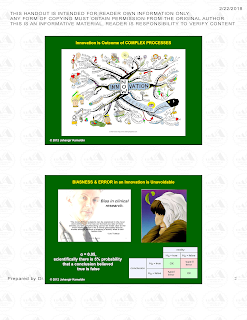
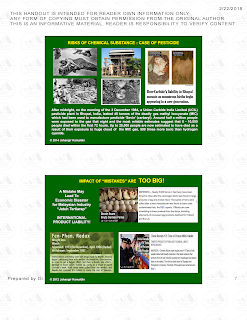
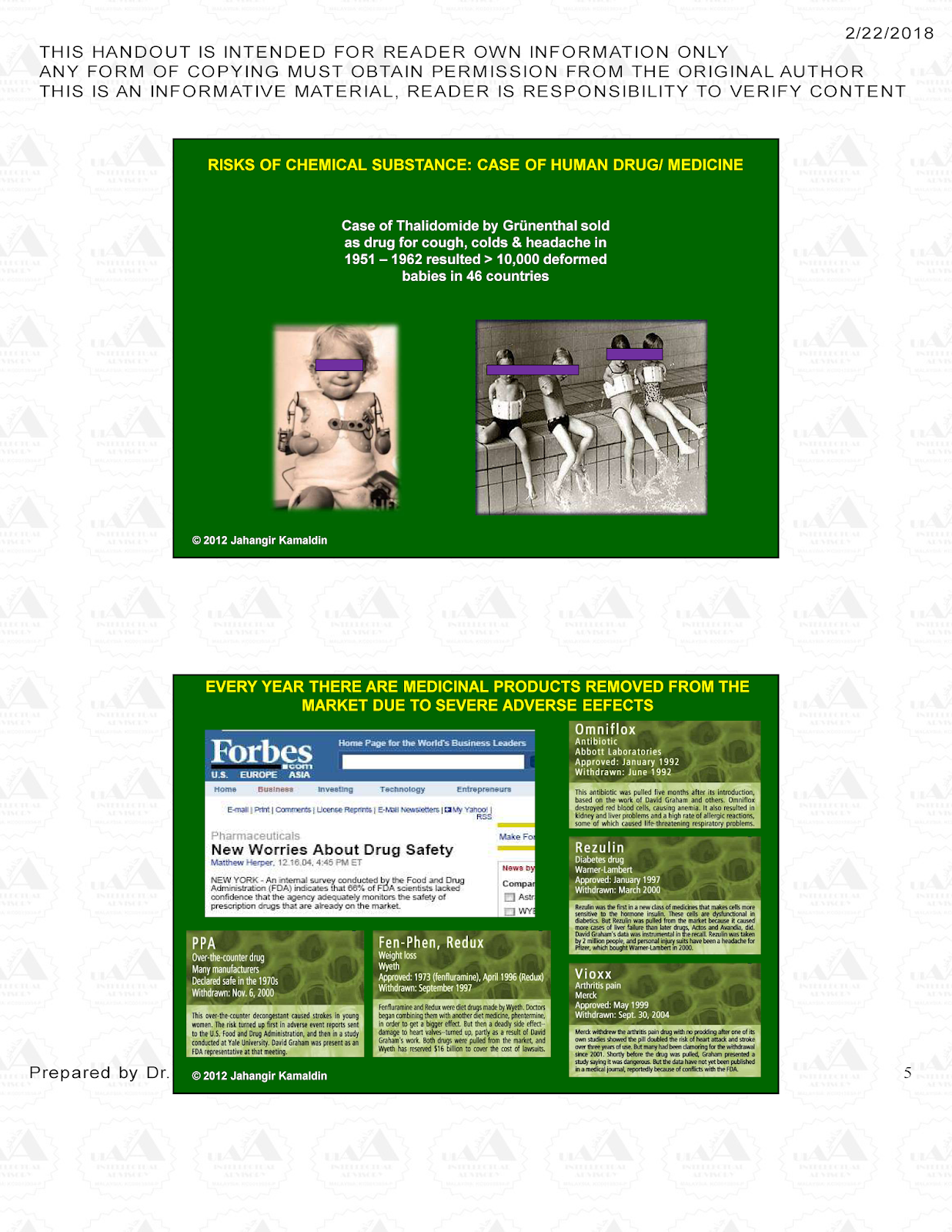
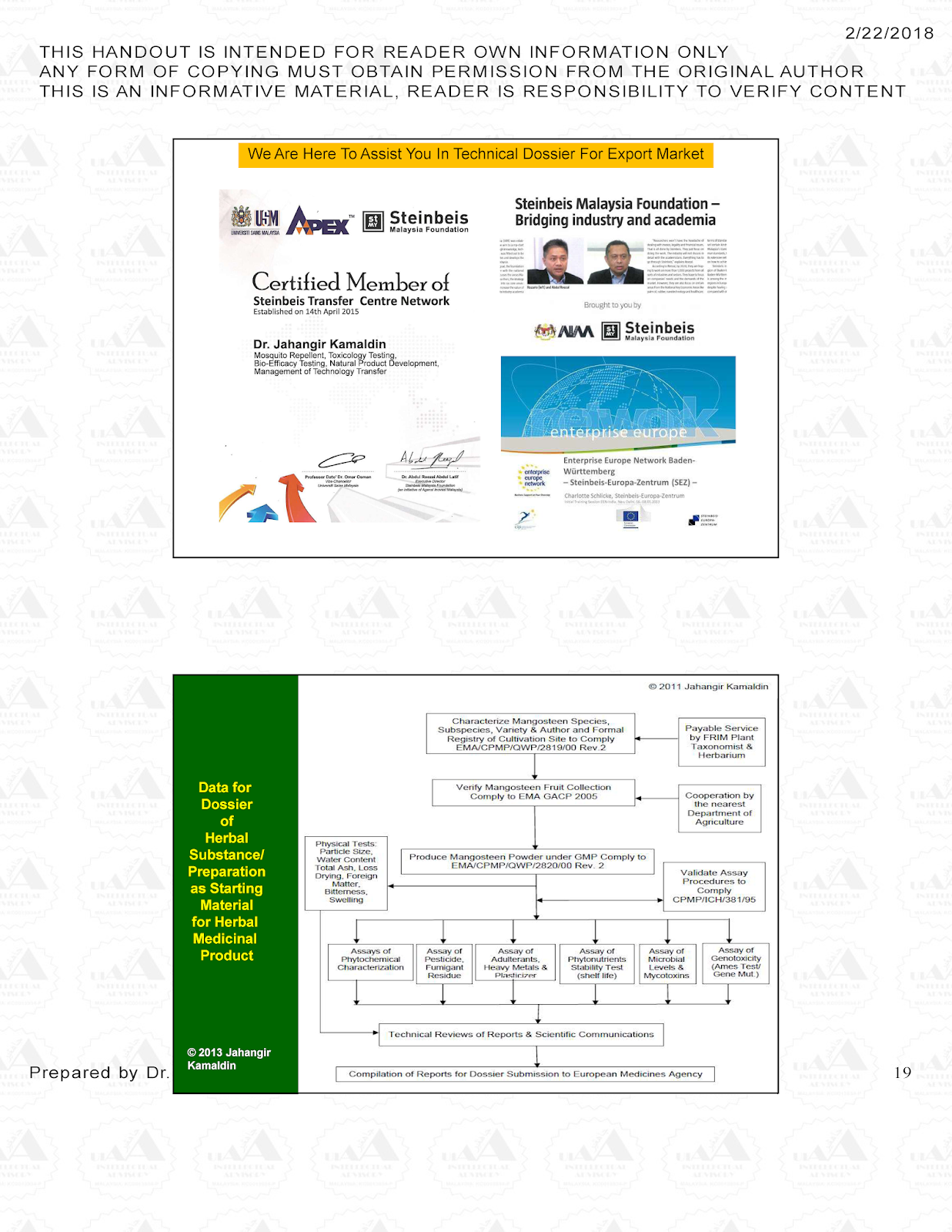
SUSTAINABLE DEVELOPMENT OF LOCAL HERBS TO GLOBAL MEDICINE
Dear Participants, hope the below images of the slide presentation would be useful to you and your organization development. Do respect, the copyrights of the images, materials etc. presented. TQVM :-)









Saturday, 17 February 2018
ORO ROSELLE GEL
 Buah roselle yang segar digunakan untuk menyediakan jus dan kaliks buah roselle kering pula digunakan untuk menyediakan teh masam (sour tea). Petua
tradisional masyarakat nusantara, cina, india dan asia barat juga mencadangkan penggunaan teh masam untuk kesihatan.
Buah roselle yang segar digunakan untuk menyediakan jus dan kaliks buah roselle kering pula digunakan untuk menyediakan teh masam (sour tea). Petua
tradisional masyarakat nusantara, cina, india dan asia barat juga mencadangkan penggunaan teh masam untuk kesihatan.
Nama
saintifik pokok roselle ialah Hibiscus sabdariffa yang berada dalam famili Malvaceae.
Kajian
saintifik berikut mengusulkan bahawa bahan kimia alami yang dikenali anthocyanin
dan vitamin C yang terkandung dalam kaliks
buah roselle berupaya memberi kesan antioksida yang kuat iaitu menghalang kerosakan sel kulit dan penuaan permukaan
kulit akibat pendedahan kepada cahaya matahari yang berpanjangan.
- Firas Al-Niaimi, and Nicole Yi Zhen Chiang. Topical Vitamin C and The Skin: Mechanisms of action and clinical applications. Journal of Clinical Aesthetic Dermatology. 2017:10(7):14–17.
- Ines Da-Costa-Rocha, Bernd Bonnlaender, Hartwig Sievers, Ivo Pischel, Micheal Heinrich. Hibiscus sabdariffa L. A Phytochemical and Pharmacological review. Food Chemistry 165 (2014) 424-443.
- Octavio Carvajal-Zarrabal, Dulce María Barradas-Dermitz, Zaida Orta-Flores, Patricia Margaret Hayward-Jones, Cirilo Nolasco-Hipólito, M Guadalupe AguilarUscanga, Anilú Miranda-Medina and Kopli Bujang. Hibiscus sabdariffa L., Roselle Calyx, from Ethnobotany to Pharmacology. Journal of Experimental Pharmacology. 2012:4: 25-39.
- Pi-Jen Tsai, John McIntosh, Philip Pearce, Blake Camden, Brian R Jordan. Anthocyanin and antioxidant capacity in Roselle (Hibiscus sabdariffa L.) extract. Food Research International Volume 35, Issue 4, 2002, Pages 351-356.
- Ru Da Pandel, Borut Poljšak, Aleksandar Godic and Raja Dahmane. Skin Photoaging and the Role of Antioxidants in Its Prevention. ISRN Dermatology, Volume 2013,11 pages.
Maklumat
pada halaman ini bertujuan pendidikan kesihatan awam dan bukan untuk indikasi
ubatan sesuatu produk.
Information
at this page is intended for public health education and not for product claim
or indication of a product.
Subscribe to:
Posts (Atom)